


.png)

Ajmer Sharif Shrine – Ziyarat, Peace and Sacred History
- mkfcharity
- Jan 11
- 4 min read
Updated: Apr 20
Ajmer Sharif Shrine – A Simple Guide for Devotees
The Ajmer Sharif shrine is one of the most respected spiritual places in India. People from many countries visit this holy shrine to pray, feel peace, and ask for dua. The shrine is in Ajmer, Rajasthan, and it is known as the Dargah of Hazrat Khwaja Moinuddin Chishti (R.A.), also lovingly called Khwaja Garib Nawaz.
For more than 800 years, the Ajmer Sharif shrine has been a place of love and unity. It welcomes everyone with respect, no matter which religion they follow. Many visitors say they feel calm as soon as they enter the shrine area. The sound of prayers, the gentle atmosphere, and the feeling of hope make this place very special.

A short history of the Ajmer Sharif shrine
Khwaja Moinuddin Chishti (R.A.) came to Ajmer many centuries ago and taught people about kindness, humility, and serving humanity. He became famous because he treated everyone with compassion. After his passing ( Wisaal) in 1236 AD, his resting place became a sacred shrine. Over time, the shrine grew into a large and beautiful complex, visited by millions.
Many rulers also showed deep respect for Ajmer Sharif. Mughal emperors visited the shrine, and some built important parts of the complex. Today, the shrine is not only a spiritual place, but also an important part of India’s heritage.
A common question people ask is about the opening and closing time. Timings can change slightly on special days, but these are the usual timings that help visitors plan their ziyarat.
Winter: 5:00 AM to 9:00 PM
Summer: 4:00 AM to 10:00 PM
Morning Khidmat: (Winter 5:00 AM–6:00 AM) (Summer 4:00 AM–5:00 AM)
Afternoon Khidmat: 3:00 PM to 4:00 PM
Roshni Dua: 6:00 PM
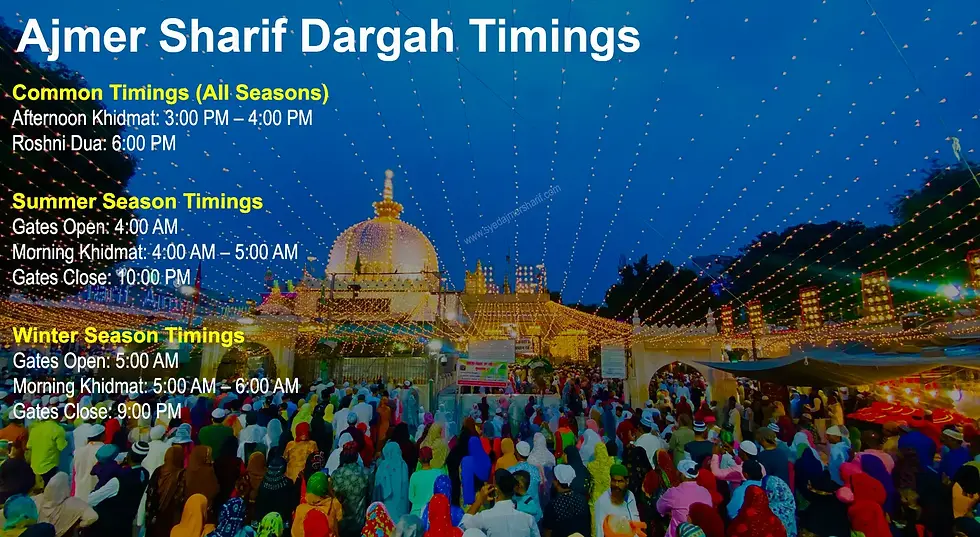
Many devotees prefer visiting early morning because it feels peaceful and less crowded. Evening time is also very special because the shrine looks beautiful during Roshni Dua.
What devotees offer at Ajmer Sharif shrine
People come to the shrine with love and respect. Some offer simple gifts, while others offer special items. Common offerings include:
Chadar (a sacred cloth offered at the shrine)
Flowers and attar (non-alcoholic fragrance)
Sandalwood (chandan) and rosewater
Nazrana and other offerings made with devotion
These offerings are not just traditions. They are a way to show respect and express love. Many people also come for darshan and ziyarat, and they quietly make dua for their family, health, and peace of mind.
Langar and Deg services
Ajmer Sharif is also well known for langar, where food is served to people with care and respect. This tradition helps many visitors every day. Another famous part of the shrine is the Badi Deg service. Deg is food prepared in large pots and shared with devotees. Many people believe that sharing food with others brings blessings and spreads kindness.
Visitors often see big cooking pots in the langar area. The smell of food, the teamwork of volunteers, and the calm environment show the spirit of service. It is not only about eating. It is also about learning to share and care for others.
Daily rituals and spiritual moments
The Ajmer Sharif shrine has daily rituals that many devotees want to witness at least once in their life. Morning Khidmat is a precious time. The shrine becomes quiet and peaceful, and special service is performed with dignity. The evening Roshni Dua is also a powerful moment. The lights, the prayers, and the peaceful crowd create a spiritual feeling that stays in the heart.
Many devotees also watch live updates and videos to stay connected. People who live far away feel close to the shrine when they see darshan and ziyarat moments online. This helps them remember the shrine and keep their faith strong.
The shrine has long-standing traditions that are maintained with respect. Many devotees also seek guidance from khadim sahab Ajmer Sharif for ziyarat planning and spiritual support. The sacred services are continued under the guidance of the Gaddi Nasheen Syed Fakhar Nawaz Chishti, who is known as the hereditary key holder and continues the daily spiritual services inside the shrine. Devotees from around the world send their names and dua requests, and these are remembered with care.
How to reach Ajmer Sharif shrine
Ajmer is well connected by road and train. The shrine is close to the railway station, which makes it easier for pilgrims. You can travel within Ajmer using auto-rickshaws, cycle rickshaws, or local transport. Many hotels and guesthouses are also available near the shrine for visitors.
Places to visit near Ajmer
Many pilgrims also visit nearby places to complete their journey. Some popular places are:
Pushkar Lake
Adhai Din Ka Jhonpra
These places add history and beauty to the Ajmer trip, especially for families and first-time visitors.
Simple visitor tips
If you plan to visit, here are a few easy tips:
Wear modest clothes and carry a scarf or cap with respect
Leave shoes outside before entering
Visit early morning if you want a calmer ziyarat
Keep your words and actions respectful inside the shrine
These small steps help make the visit peaceful for everyone.
Final note for devotees
The Ajmer Sharif shrine is a place where people come with hope, love, and respect. Some come to thank Allah, some come to ask for help, and many come to find peace. Whether you visit in person or stay connected from far away, the feelings of darshan, ziyarat, and dua remain the same.
On special days, many devotees send greetings and prayers by saying khwaja garib nawaz urs mubarak, and for guidance or support, you can save the ajmer sharif contact number +91 85296 71277.


